
20/12/2022
Vietnam’s digital transformation Outlook 2022
For Vietnam's government, digital transformation is a must for the country's continued economic success. According to projections, Vietnam's Gross Merchandise Volume (GMV) will increase by 28% in 2022, making it one of the most rapidly developing digital economies in Southeast Asia. It is projected that by 2030, the digital sector will account for 30% of Vietnam's GDP. Digital transformation: key to Vietnam's development The COVID-19 Impact Accelerating the country's digital push helped Vietnam handle COVID-19 rather well, making it one of the few nations to do so. It will take a lot of work, but Vietnam may provide the groundwork for its domestic institutions to embrace cutting-edge digital technologies and become a digital powerhouse in the future. The role of EVFTA in Vietnam's transition to digital By improving Vietnam's legal framework for digital transformation and fostering the growth of electronic commerce between the European Union and Vietnam, the EVFTA will contribute to the expansion of Vietnam's digital economy and progress. This will be achieved by regularly and fruitfully discussing the regulatory issues that digitization and e-commerce have raised. With the steady improvement of e-commerce rules, legislation, and frameworks, Vietnam will be able to go forward with its digital transformation. Digital Transformation: The Cornerstone of Vietnam's National Plan Vietnam hoped to complete two primary objectives by the century's midpoint. One goal, as stated by Prime Minister Pham Minh Chinh at COP26, is to reach net-zero carbon emissions by the year 2050. Another is to achieve high-income status by 2045, as stated in a resolution passed by the 13th National Party Congress. To achieve these objectives, digital transformation is essential. Many national programs emphasize it as a major priority for that reason. The primary areas that this digital revolution will impact Manufacturing The majority of industrial organizations currently have access to digital technology, making this industry ripe for digital transformation. Most companies are involved in processing and assembly, so manufacturing-related technologies are often well-received. Technologies such as robotics, automation, and monitoring and control fall under this category. Finance and Banking The financial technology industry in Vietnam is growing at a remarkable rate, considering its youth. In 2021, digital payments facilitated the majority of the venture capital invested in Vietnam (93%). The rapid growth of e-commerce, the massive number of smartphone users, and robust internet penetration in the country are all factors that have contributed to the rise of FinTech. E-commerce Online shopping is booming in Vietnam, making it one of the country's most dynamic digital economy sectors. The e-commerce market in Vietnam is growing at a rate of 35% annually, which is 2.5 times quicker than Japan, according to VECITA. Online shopping in Vietnam is expected to reach a new high of 16.4 billion USD in revenue, setting a new standard for this sector. Logistics The impact of digital transformation on logistics is a growing worry for both governments and corporations. The Vietnamese Minister of Industry and Trade, Nguyen Hong Dien, has stated that the country's logistics service sector will expand rapidly and ethically in response to international demand. The Ho Chi Minh City People's Committee has disseminated a plan for the digital transformation of the local logistics sector from 2022 to 2025, with an eye toward 2030. By 2025, the city will have completed developing digital platforms that connect multimodal transport services, a consolidated data repository, and a digital logistics map. There has been a lot of success, but far more work remains before Vietnam catches up in the development of its digital capabilities. This will ensure that the country's digital economy can benefit all citizens equally. To top it all off, Vietnam is ready to embrace digital change. Source : Source of Asia
Read more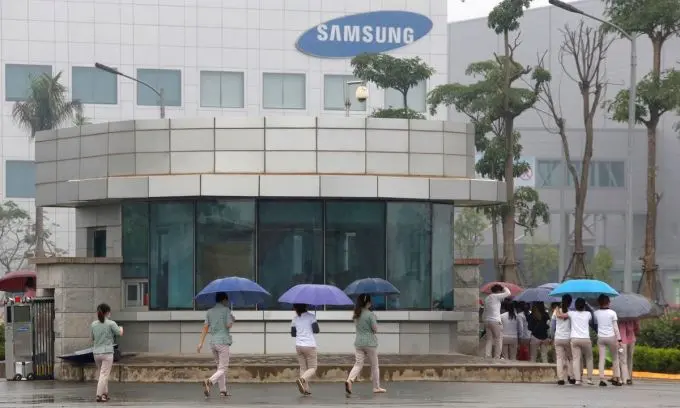
07/12/2022
Samsung Boosts Vietnam Investment to $20B with New R&D Center Launch
South Korean electronics giant Samsung announced plans Tuesday to increase its investment in Vietnam from $18 billion to $20 billion. Samsung’s new Research and Development Center in Vietnam has been completed and will soon come into operation, focusing on research on phones, computers, and network systems, Vietnam News Agency quoted Han as saying. In upcoming big fairs, Samsung will exhibit leading hi-tech products and solutions, and if there are partners, the firm will manufacture them in Vietnam. Samsung Electronics Vietnam reported export turnovers of $65.5 billion in 2021, helping turn Vietnam into a global smartphone manufacturing hub. The Vietnamese president also met Tuesday with Hyosung chairman Cho Hyun Joon, who said the South Korean industrial group has invested $3.5 billion in Vietnam. Source : VnExpress
Read more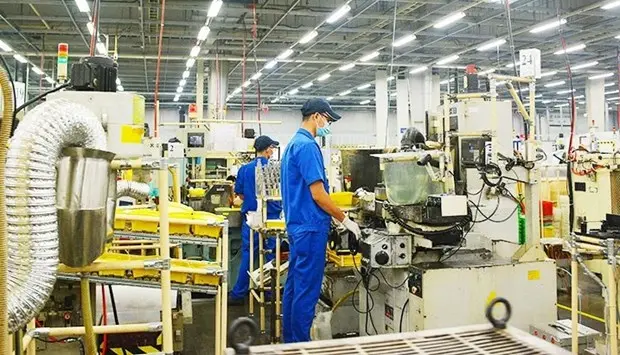
25/11/2022
Vietnamese tech firms have room to grow
Vietnamese tech firms are expected to grow rapidly in both the mid and long-term thanks to rising IT demand around the world and rapid digital transformation at home. Statista, a German company specialising in market and consumer data, said IT services spending is expected to amount to 1.28 trillion USD and 1.39 trillion VND in 2022 and 2023, up 7.9% and 8.8%, respectively. The Vietnamese Ministry of Information and Communications targeted 100,000 digital firms in Vietnam by 2025, a rise of 56.25% from 2021. The telecom segment is expected to grow stably thanks to a rise in the number of broadband subscribers (8-10%), and a boom of 4G and 5G services. Notably, Vietnam has advantages in its IT workforce market . /vietnam-software-outsourcing Read more: Vietnam Software Outsourcing in 2023 According to HSBC, 51 percent of programmers in Vietnam are 29-30 years old. The hourly wage for. IT outsourcing software development in Vietnam is about 18 USD, equivalent to 64% in other Asian nations and 10% in the US. Therefore, clients from big markets like the US, Japan, the EU and Asia-Pacific have selected Vietnam as an ideal destination for cooperation in IT development. Source: vietnamplus
Read more
17/11/2022
Vietnam climbs the chip value chain
The CEO of Samsung Electronics met with Vietnamese Prime Minister Pham Minh Chinh and announced a US$850 million investment to manufacture semiconductor components in Thai Nguyen province on 5 August 2022. The investment will make Vietnam one of only four countries — alongside South Korea, China, and the United States — that produce semiconductors for the world’s largest memory chipmaker. Vietnam’s selection over more developed locations speaks volumes about the country’s rising importance in the semiconductor value chain . Vietnam’s industrial and technology policies have always granted the highest incentives for high-tech projects, including corporate income tax reduction and sales tax and land rent exemption. In 2020, as tech firms continued to exit China, Vietnam established a special working group to court high-tech investments by offering customized incentives beyond those specified by existing laws. Different Vietnamese prime ministers have met with executives of global tech giants to encourage investment in /technologies/hardware-integration semiconductors . http://www.tmasolutions.com/news/semi-conductor-production-industry-vietnam-a-best-place-for-investment Vietnam Semiconductor Industry: Key Investment Hub 2021 - 2025 Intel recently channeled an additional US$475 million into its assembly and test plant in Vietnam that produces core processors. Local tech corporations have similarly launched their own lines of low-end semiconductors for a wide range of applications. Such projects are laying the foundation for even more investments to come. The next step for Vietnam is to go beyond attracting foreign direct investment to integrating multinationals into its economy. Weaknesses in the country’s investment climate — including backward infrastructure, weak intellectual property rights enforcement, cumbersome procedures, underdeveloped supplier networks, and a shortage of local skills — must be urgently addressed. Source: East Asia Forum
Read more
20/10/2022
Fostering national digital transformation
With Vietnam making new moves to accelerate digitally, the local tech market has become more appealing to international players over the past two years, with expansion intensifying in specific areas. Shah Zeb, senior director of Business Development at Qualcomm Technologies, last week flew from the US to Vietnam to attend the Vietnam International Digital Week from October 11-14 in Hanoi, demonstrating Qualcomm’s interest in the local tech market amid the country’s acceleration to commercialize 5G. “Vietnam has three big goals: successfully deploying the 5G network; designing products for domestic and international markets; and developing digital skills and capacity,” he said. Vietnam and Qualcomm have agreed to intensify cooperation in developing and commercializing products, especially 5G devices, to meet local and international needs. Qualcomm is working with Vietnamese network operators such as Viettel, VNPT, Mobifone, BKAV, and Vinfast in 5G activities. ICT cooperation and interest have also intensified at the country level as meetings with Japan, South Korea, and the United States. At the Vietnam-Japan Digital Forum held on October 12, Vietnam’s Ministry of Information and Communications (MIC) and its Japanese counterparts discussed digital transformation and 5G rollout in the two countries. Representatives from Japanese ICT firms like Hitachi, Fujitsu, and NTT Data also shared their plans to work with partners in Vietnam. In September, the MIC also held similar events in South Korea and the United States. Encouraging enterprises to accelerate the digitalisation of production and business activities and establishing effective digital service delivery channels, the country will also enhance investment in digital infrastructure, research and development, and international cooperation in digital transformation. Source: Vietnam Investment Review
Read more
08/10/2022
Vietnam: Prime destination for semiconductor investments
The semiconductor industry is undergoing significant global shifts, and Vietnam is emerging as a key player in this transformation. According to market research released by Technavio, one of the world's leading technology research and consulting companies, the semiconductor market in Vietnam is poised for impressive growth. Expected to expand by $1.65 billion at a compound annual growth rate (CAGR) of about 6.52% between 2021 and 2025, Vietnam's semiconductor sector offers compelling opportunities for foreign investors. This article provides an in-depth analysis of the semiconductor production industry in Vietnam, highlighting its growth potential, legal framework, and strategic advantages. Growth of the semiconductor industry in Vietnam Over the past decade, Vietnam has attracted substantial foreign investment in the microelectronics and semiconductor sectors. Major multinational corporations such as Intel Corporation, Jabil, Sonion, Datalogic, and GES have established operations in Ho Chi Minh City's High-Tech Park, signaling their confidence in Vietnam's capabilities. This influx of investment has not only boosted the local economy but also positioned Vietnam as a significant player in the global semiconductor supply chain. The rapid growth of Vietnam's semiconductor industry can be attributed to several factors. First, the country's strategic location in Southeast Asia makes it an ideal hub for companies looking to optimize their supply chains and reduce shipping times to key markets. Additionally, Vietnam offers competitive labor and production costs, which are significantly lower than in many other countries. These cost advantages, combined with the government's proactive policies, have made Vietnam an attractive destination for semiconductor manufacturers. Legal framework supporting semiconductor development Vietnam's government has recognized the importance of the semiconductor industry and has implemented a robust legal framework to support its growth. Key legislation, such as Decision No. 439/QD-TTg dated April 16, 2012, identifies semiconductor development as one of the nine key national products under the National Product Development Program to 2020. This decision underscores the government's commitment to fostering the semiconductor sector as a vital component of the country's industrial strategy. In addition to Decision No. 439, the government issued Decision No. 66/2014/QD-TTg, which lists high technologies prioritized for development investment and high-tech products encouraged for development. This legal framework specifically includes technologies for designing and manufacturing semiconductors and semiconductor devices, further highlighting the government's focus on this critical industry. By prioritizing the semiconductor sector, Vietnam aims to attract more foreign investment and enhance its technological capabilities, thereby driving economic growth. Strategic advantages of Vietnam for semiconductor production Vietnam's appeal as a semiconductor production hub extends beyond its legal framework and competitive costs. The country's strategic location offers significant logistical advantages, making it easier for companies to access key markets in Asia, Europe, and the Americas. Vietnam's proximity to China, the world's largest semiconductor market, is particularly advantageous for companies looking to tap into this vast market while diversifying their supply chains. Another critical factor contributing to Vietnam's attractiveness is its extensive network of free trade agreements (FTAs). Vietnam is a signatory to 13 FTAs, making it one of the most connected countries in the region. In contrast, Singapore has only six FTAs, and Malaysia has seven. These agreements provide Vietnam with favorable market access and investment conditions, allowing foreign investors to benefit from reduced tariffs and other trade incentives. The most notable FTAs that have positively impacted Vietnam's semiconductor industry are the EU-Vietnam Free Trade Agreement (EVFTA) and the Comprehensive and Progressive Agreement for Trans-Pacific Partnership (CPTPP). These agreements grant preferential market access and investment conditions, making Vietnam an even more attractive destination for semiconductor manufacturers. Under the tariff schedules of these agreements, most semiconductor products enjoy a 0% base tariff rate, further enhancing the country's competitiveness. Vietnam as an ideal destination for semiconductor investment In conclusion, Vietnam's semiconductor industry is well-positioned for significant growth, driven by a combination of strategic location, competitive costs, a favorable legal framework, and extensive free trade agreements. The government's commitment to supporting the semiconductor sector, coupled with the growing interest from multinational corporations, underscores Vietnam's potential as a leading hub for semiconductor production. For business owners and investors in the semiconductor industry, Vietnam offers a unique opportunity to capitalize on the country's advantages and contribute to its burgeoning technological landscape. As global demand for semiconductors continues to rise, Vietnam's role in the industry is set to expand, making it an ideal destination for investment. With the right strategies and partnerships, foreign investors can tap into Vietnam's growth potential and secure a strong foothold in the global semiconductor market.
Read more