
23/06/2023
RPA Market Overview: 2021-2023 Trends and Future Expectation
The landscape of Robotic Process Automation (RPA) has evolved significantly over the past few years, showing remarkable growth and widespread adoption across various industries. As businesses increasingly recognize the benefits of automation, the RPA market has experienced substantial expansion. This article provides an overview of the key trends and future expectations for the RPA market from 2021 to 2023, drawing insights from industry surveys and research reports. Key Findings on RPA Adoption The implementation of RPA has become a strategic priority for many organizations. According to Deloitte’s Global RPA Survey conducted in 2021, a substantial 78% of organizations had already implemented RPA within their operations. Another 16% were planning to adopt RPA within the next three years, while only 6% of organizations had no plans to integrate RPA into their processes. These statistics underscore the growing recognition of RPA as a critical tool for enhancing operational efficiency and achieving competitive advantage. The Impact of RPA on Business Operations RPA has demonstrated its value across multiple dimensions of business operations, consistently meeting and often exceeding expectations. The following are some of the key benefits that organizations have reported: Improved Compliance : 92% of organizations reported enhanced compliance as a result of implementing RPA. By automating routine tasks, RPA helps ensure that processes are carried out consistently and in accordance with regulatory requirements. Enhanced Quality and Accuracy : 90% of businesses experienced improvements in the quality and accuracy of their operations. Automation reduces the risk of human error, leading to more reliable and precise outcomes. Increased Productivity : 86% of organizations noted a significant boost in productivity. RPA enables businesses to automate repetitive tasks, allowing employees to focus on higher-value activities that require human judgment and creativity. Cost Reduction : 59% of companies reported cost savings through the use of RPA. By streamlining processes and reducing the need for manual intervention, organizations can lower operational costs and improve their bottom line. Market Size and Growth Projections The RPA market has seen impressive growth, with significant increases in market size year over year. In 2022, the RPA market was valued at USD 2,322.9 million. By 2023, this figure had risen to USD 2,942.7 million, reflecting the strong demand for automation solutions. Looking ahead, the market is expected to continue its rapid expansion, with a projected compound annual growth rate (CAGR) of 39.9% from 2023 to 2030. By 2030, the RPA market is forecasted to reach an astounding USD 30,850.0 million. Regional and Industry Insights RPA adoption varies across regions and industries, with some areas leading the charge in embracing automation technologies: North America : This region accounted for the largest share of the RPA market in 2022, representing 37.2% of the global market. North America is expected to maintain steady growth during the forecast period, driven by the continued adoption of RPA across various sectors. Small and Medium Enterprises (SMEs) : The SME segment is projected to experience the highest CAGR from 2023 to 2030. As SMEs increasingly recognize the benefits of automation, RPA solutions are becoming more accessible and tailored to the needs of smaller organizations. Banking, Financial Services, and Insurance (BFSI) : The BFSI sector holds the largest revenue share of the RPA market, accounting for 28.8% of the overall market. This industry has been a pioneer in adopting RPA to automate routine processes, enhance client service, and ensure regulatory compliance. Future Expectations for the RPA Market The future of the RPA market is bright, with significant growth expected in both software and related services. By 2025, the RPA software market is anticipated to reach USD 6.5 billion. In addition to software, RPA-related services are projected to grow even more rapidly, potentially reaching USD 16 billion by 2025. These services, which include consulting, implementation, and support, are essential for organizations looking to successfully integrate RPA into their operations. TMA Solutions: A Global Leader in RPA TMA Solutions, with its strong presence in international markets across North America, Europe, and Asia, is well-positioned to capitalize on the growing demand for RPA solutions. With a large team of over 4,000 software engineers, TMA has the scale and technical capability to handle large and complex projects. The company’s expertise spans a wide range of cutting-edge technologies, including Artificial Intelligence (AI), Internet of Things (IoT), Big Data, Cloud Computing, and Blockchain, making them a key player in the global RPA market. Conclusion As organizations continue to seek ways to improve efficiency and reduce costs, the adoption of RPA is expected to accelerate. The market’s rapid growth, coupled with the increasing accessibility of automation solutions, suggests that RPA will become an integral part of business operations across industries. Companies like TMA Solutions, with their global reach and technical expertise, are poised to lead the way in delivering innovative RPA solutions that meet the evolving needs of businesses worldwide.
Read more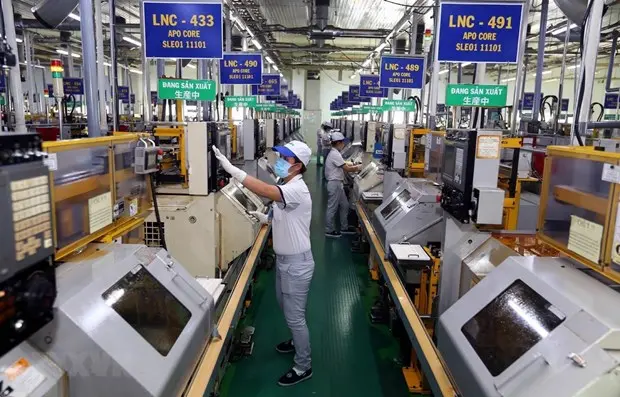
18/05/2023
Vietnam's rise as global production hub due to investment
Despite impacts caused by the COVID-19 pandemic, foreign direct investment (FDI) is still being poured into Vietnam, contributing importantly to turning the country into a new production hub of the world. http://www.tmasolutions.com/news/electronic-firms-continue-to-shift-investment-to-vietnam Electronics Firms Shifting Investment to Vietnam http://www.tmasolutions.com/news/samsung-to-increase-vietnam-investment-to-20b Samsung to Increase Vietnam Investment to $20B Statistics from the Ministry of Planning and Investment (MPI) show that from January 2018 to April 20, 2023, the registered FDI in Vietnam totaled 180 billion USD, equaling 40.3% of the accumulated investment capital over the last 35 years. Vietnam is becoming a new production center. According to Minister of Planning and Investment Nguyen Chi Dung, more and more multinationals and big investors have continuously invested in Vietnam. Dozens of research and development (R&D) centres, innovation hubs, and technology incubators have been established, making it easier for domestic firms, especially small- and medium-sized enterprises, to connect with foreign businesses, they noted. Source: VietnamPlus
Read more
17/05/2023
Vietnam Ranks Second among 22 Markets in Digital Transformation
Research from DBS, a leading financial services group in Asia, on /services/digital-transformation digital transformation has found that Vietnam is among the top 10 markets in the region in the endeavor and ranks second after Singapore among the 22 markets surveyed. http://www.tmasolutions.com/news/vietnam-leads-asean-in-growth-of-digital-economy Vietnam's Digital Economy: ASEAN's Leading Growth | 2025 Predictions The top 10 markets are Australia, China, Hong Kong (China), India, Indonesia, Singapore, Taiwan (China), the UK, the US, and Vietnam. Companies in Vietnam (68%) ranked higher than the global average (64%) in taking a strategic, consistent, or radical approach to digitalizing the client experience and engagement, according to the research. The majority of Vietnamese companies (63%) were satisfied that digital transformation was helping them achieve overall profitability, followed by providing improved client insight (61 percent) and overall competitiveness in the market (57%), according to the research. More than half (56%) said they have been effectively using digital technology in client service and engagement. The findings also revealed that many Vietnamese companies (35%) were in the “developing leaders” category in terms of digitalizing their client engagement, with major potential existing for high transformation performance down the road. Source: VnEconomy
Read more
10/05/2023
The Future of Artificial Intelligence in Vietnam
Artificial intelligence might revolutionize financial markets. Vietnam has a great chance to gain and take the lead in both development and application. Here we'll take a look at AI in Vietnam, talk about its effects there, and show you some specific examples of its usage. Is Vietnam ready to build AI? There are three main components that determine a nation's or territory's preparedness for artificial intelligence: its data infrastructure, its technology, and its governance. A government's bedrock The 2019 report from Vietnam's Ministry of Information and Communication states that there are more than 80,000 college and university graduates with degrees in information and communications technology, over 955,000 IT professionals, and more than 30,000 ICT firms of all sizes. In addition, Vietnam has become one of the most popular locations for /services" target="_blank IT outsourcing globally and the new IT center in Southeast Asia. Numerous AI applications have achieved remarkable progress in the nation due to its open economic environment and big labor pool. In an effort to foster the growth of artificial intelligence, many Vietnamese universities and research institutes have set up AI Centers of Excellence. The centers work with business partners to create AI solutions for different industries in Vietnam while also supporting and resourcing researchers. When properly implemented, AI has the potential to revolutionize corporate practices and spur economic expansion. Vietnam may be struggling to keep up with the rest of the pack when it comes to artificial intelligence, but that shouldn't stop this Southeast Asian nation from pouring resources into digital transformation. The foundation of technology The Vietnamese minister of planning and investment recently announced the creation of a digital ecosystem devoted to innovation and new technology, as well as the proposal of a national innovation center to foster technical advances and the innovative ideas of Vietnamese entrepreneurs. The data and infrastructure foundation The country has emphasized the long-term building, maintenance, and development of data infrastructure to speed up the economic growth of AI technology and make AI research, development, and application more efficient and effective. Vietnam has made great strides toward the imminent deployment of full-scale AI, with its AI readiness score for data infrastructure reaching 51.87. Difficulties presented by AI in Vietnam On the one hand, Vietnam's path has serious limitations when it comes to human resources and funding for AI research and development. Investing in AI technology is crucial for developing highly efficient and productive apps. So, it's critical that the Vietnamese government immediately provide sufficient funds for AI research. Vietnam is lacking in AI-specific human resources, as are other "rookies" in the AI race. Staffing for local AI initiatives will be challenging in Vietnam due to the need for a substantial pool of AI professionals, despite the country's superior IT labor base compared to other nations in the area and globally. World Intellectual Property Organization (WIPO) indexes show that more than 1,600 Vietnamese are engaged in AI-related fields of education or employment. Does Vietnam's AI field hold any promise for future advancements? Given the government's commitment and backing of the AI industry, we have reason to assume that Vietnam possesses all the necessary components to become an AI center quickly. If Vietnam keeps up its current level of commitment and efforts, it has boundless potential to lead the digital revolution utilizing AI. Source: Innovature BPO
Read more
16/04/2023
Vietnam-Australia tech innovation, Smart City collaboration
The recent Australia-Vietnam Tech Forum, held in Ho Chi Minh City, marked a significant milestone in the collaboration between Vietnam and Australia in the field of technology. The forum, which attracted over 70 executives from 42 technology companies, showcased Australian expertise in fintech, digital transformation, and smart cities. This event highlighted Vietnam’s commitment to leveraging Industry 4.0 technologies to enhance productivity and drive economic growth. Vietnam's strategic focus on AI development Vietnam has emerged as a promising market with a large population, a government dedicated to ambitious goals, and one of the fastest-growing digital economies in the region. According to the World Bank, Vietnam’s digital sector is projected to surpass USD 200 billion by 2045, a substantial figure compared to its GDP of USD 352 billion in 2021. This growth is driven by an increase in fintech payment values, which have nearly tripled from 2017 to 2021, largely due to the boom in e-commerce. The Vietnamese government has placed a strategic focus on artificial intelligence (AI) development, aiming to position the country among the top four in ASEAN and within the top 50 globally in AI research, development, and application by 2030. This ambitious goal is supported by a national AI strategy that seeks to foster a robust environment for AI growth. Vietnamese tech firms: Growth potential and opportunities Vietnamese technology firms are well-positioned to benefit from this supportive environment. The country's digital economy is expanding rapidly, and there is significant potential for growth in various sectors, particularly fintech. The integration of Industry 4.0 technologies is expected to boost productivity and spur further economic development. The forum also highlighted the role of Australian expertise in supporting Vietnam’s digital transformation. Australia's experience in fintech and smart city development provides valuable insights and strategies that can help Vietnamese companies and the government achieve their technological goals. Australian support for ASEAN smart cities Australia has shown a strong commitment to supporting ASEAN countries, including Vietnam, in the development of sustainable smart cities. Rebecca Ball, the Senior Trade and Investment Commissioner at Austrade, emphasized that the Australian government is actively involved in creating smart and sustainable urban environments in the region. This includes the InnovationXchange program, which has allocated AUD 5 million (approximately USD 3.3 million) for a pilot project aimed at scaling high-growth potential enterprises focused on smart urbanization solutions. This initiative is part of a broader effort to support smart city development across ASEAN, enhancing urban living through advanced technologies and sustainable practices. The pilot project will provide crucial support to enterprises working on innovative solutions for smart cities in ODA-eligible cities across the region. The AI cooperation network In 2021, Vietnam and Australia established an AI cooperation network to foster collaboration between Vietnamese and Australian entities. This network brings together individuals, businesses, and organizations involved in AI from both countries to work together on various projects. The network aims to facilitate knowledge exchange and collaboration, enabling Vietnam to learn from Australian expertise and international best practices. The AI cooperation network is a significant step toward achieving Vietnam's national AI strategy goals. By creating a conducive environment for AI development, the network supports Vietnam’s aspiration to excel in AI research and application. This collaboration is expected to drive innovation and contribute to the country’s position as a leader in AI within the ASEAN region and globally. Conclusion The Australia-Vietnam Tech Forum represents a pivotal moment in the collaboration between the two countries, highlighting their joint efforts in advancing technology and smart city development. With a focus on AI and digital transformation, Vietnam is poised to leverage these opportunities to enhance its economic growth and technological capabilities. The continued support from Australia and the establishment of strategic initiatives like the AI cooperation network will play a crucial role in realizing Vietnam’s ambitious goals in the tech sector. Source: OpenGov Asia
Read more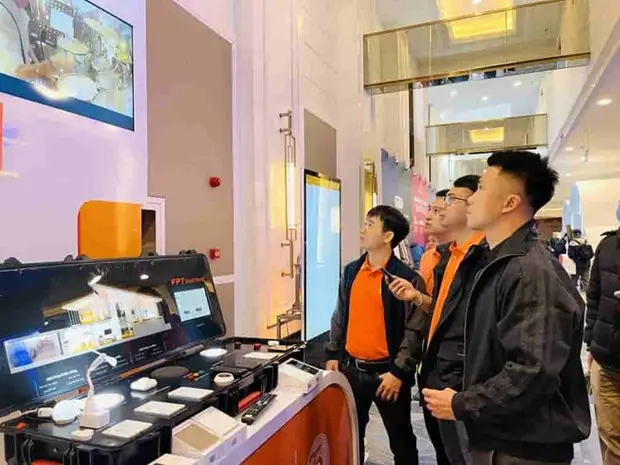
10/03/2023
Domestic ICT firms well-positioned to reach out to the world
Vietnam's information and communication technology (ICT) companies are well-positioned to make strong breakthroughs and reach out to the world in the near future, on the back of widespread Internet access, abundant workforce and support from authorities at all levels. Statistics from the International Telecommunication Union (ITU) showed that about 49% of the world population, or nearly 4 billion people, have yet to be connected to the Internet. It is a chance for Vietnamese ICT firms to reach globally. http://www.tmasolutions.com/news/vietnamese-it-firms-to-improve-earnings-reach-overseas-markets Vietnamese IT Firms Boost Earnings in ICT Industry /vietnam-software-outsourcing Vietnam Software Outsourcing Vietnam now ranks 12th in the world in terms of the number of Internet users with over 70 million subscribers. There are roughly 45,000 ICT firms with more than 1 million employees. The country also leads Southeast Asia with 25 software enterprises obtaining Capability Maturity Model Integration (CMMI) certification, surpassing Singapore and Malaysia. In the coming time, the Ministry of Information and Communications MIC together with technology associations will support ICT firms by promoting economic diplomacy in digital technology, tapping global trade mechanisms to market digital technology trademarks, holding digital investment and trade promotion forums and conferences abroad, and advising the Government to sign digital partnership deals with countries, Hung said. Source: vietnamplus
Read more