
30/10/2024
LG Electronics Expands R&D Footprint in Vietnam
LG Electronics is significantly enhancing its research and development (R&D) capabilities in Vietnam by broadening its focus from software development to include innovative home appliance solutions. This expansion encompasses key areas such as lifestyle, kitchen, and air solutions. Since establishing the Hanoi R&D Centre in 2016, LG has further extended its presence by opening R&D subsidiaries in Hai Phong and Da Nang in 2023. The Hanoi center, officially incorporated in 2023, has expanded its research scope to include the webOS smart platform and plans to increase its R&D workforce from 1,100 to over 1,200 employees this year. In just eight years, the Hanoi center has emerged as a vital R&D hub for Southeast Asia, supported by talent development programs in partnership with local institutions like the Hanoi University of Industry. Source: vietnamnews.vn
Read more
23/10/2024
AI in Healthcare: Potential Opportunities and Development in Vietnam
Artificial Intelligence (AI) is becoming a major trend in the global healthcare sector, leading to significant advancements such as early diagnosis, personalized treatment, and reducing the strain on hospital systems. At the seminar "Application of Artificial Intelligence in Healthcare: Potential and Opportunities," experts emphasized the potential of AI for automating processes, managing medical records, detecting cancer early, and assisting with diagnostic imaging. Ms. Yen Ho, Director of the HealthTech Division at TMA Innovation, noted that AI applications are being implemented in hospitals to streamline operations, manage patient records, conduct cancer screenings, and support diagnoses. AI is especially advantageous for cancer diagnosis because of its ability to analyze data quickly and accurately, enabling doctors to spot early signs of disease and determine the best treatment options based on each patient's unique characteristics. In Vietnam, several hospitals have been using AI for cancer diagnosis, employing automated imaging analysis systems to help doctors make more precise treatment decisions. Additionally, universities and research institutes are actively developing AI solutions for medical diagnostics, particularly in rural areas with limited resources. Ms. Yen Ho (TMA Innovation) presents on the trend of AI technology in the global smart healthcare landscape. Despite its significant potential, the adoption of /technologies/ai-ml-and-data-sciences" target="_blank AI in healthcare in Vietnam still faces several challenges, such as a lack of digitized data and an incomplete IT infrastructure. Experts recommend that AI be integrated into the national digital transformation strategy, data standardization be prioritized, and the deployment of existing AI applications be accelerated. This will not only enhance the quality of healthcare but also expand access to medical services in remote and underserved areas where healthcare conditions are limited. As AI gradually becomes an essential part of the healthcare sector, it promises to bring many long-term benefits, not just for hospitals and doctors, but also for the patient community, improving the healthcare experience and enhancing treatment effectiveness. Source: Information and Communication Magazine
Read more
22/10/2024
Vietnam and the United States Promote Comprehensive Strategic Partnership: Enhancing Semiconductor and Artificial Intelligence Development
The seminar brought together leaders and top experts from major U.S. tech companies like AMD, Google, and Marvell, as well as representatives from semiconductor industry associations. Minister of Planning and Investment Nguyen Chi Dung highlighted that the Vietnam-U.S. relationship is deepening, especially in terms of economic and high-tech cooperation. During the seminar, participants shared international experiences and noted that Vietnam has great potential for collaboration in these areas. They expressed confidence that, with the current strategy, Vietnam will become an attractive destination for investors and achieve significant success in the future. General Secretary and President To Lam speaks at the seminar on Strengthening Vietnam-U.S. Cooperation in the Development of the Semiconductor and Artificial Intelligence Industries. Photo: Lam Khanh/TTXVN During the seminar, General Secretary and President To Lam highlighted three strategic priorities for socio-economic development by 2030: institutional reform, infrastructure, and human resources. The growth of the semiconductor and AI industries is seen as a key focus as Vietnam moves toward a digital and green economy. Vietnam has many strengths for developing these industries, including hundreds of thousands of programmers and millions of IT professionals trained over the past 20 years, which provides a strong foundation for the AI and semiconductor sectors. Additionally, Vietnam welcomes U.S. companies and organizations to collaborate in developing innovative and sustainable solutions together. Source: baotintuc.vn
Read more
21/10/2024
Elevating the Semiconductor Industry: Affirming Position in the Digital Age
The semiconductor industry is becoming a crucial pillar of Vietnam's digital economy, with the government actively attracting investment from foreign enterprises. Strong Development Potential With its key role in the digital economy, the semiconductor industry is solidifying its importance in the context of the Fourth Industrial Revolution. Semiconductor products are widely applied across various fields, creating a trend that requires countries to enhance their capabilities and diversify supply chains. Vietnam holds geopolitical advantages and human resources in the semiconductor sector. With an estimated 20 million tons of rare earth reserves, Vietnam ranks second in the world for this resource, following China. Furthermore, the government has approved a human resource development program for the /technologies/hardware-integration" target="_blank semiconductor industry , aiming to train at least 50,000 university-level professionals by 2030. Increasing Investment Sources Currently, Vietnam is attracting significant interest from leading corporations in the semiconductor industry. In 2024, the value of the semiconductor industry is projected to exceed $6.16 billion, positioning Vietnam as one of the important chip manufacturing hubs in the world. Sustainable Development Strategy On September 21, 2024, the Prime Minister issued a strategy for developing Vietnam's semiconductor industry through 2030, with a vision for 2050. The goal is to selectively attract investment, and establish at least 100 chip design companies, one small-scale chip manufacturing plant, and 10 packaging plants. Vietnam is actively facilitating the entry of foreign high-tech enterprises into the semiconductor industry, aiming to improve product quality and expand access to modern technology, striving for a leading position as a semiconductor manufacturing center in the region. Source: Information and Communication Magazine
Read more
20/10/2024
Vietnam's Digital Economy: Advanced Technology and the Rise of the Middle Class
Vietnam's digital economy is rapidly growing, reaching a value of $30 billion in 2023 and projected to increase by 20% to $43 billion by 2025. This growth is driven by the adoption of technology in businesses, the development of fintech, and rising incomes among the middle class, according to a report from Acclime Vietnam. Businesses Quickly Embracing Digital Transformation Vietnam has undergone a significant technological transformation, with 87% of surveyed businesses implementing digital transformation. A survey by the Ministry of Planning and Investment shows an improvement in digital readiness across all sectors. Notable Trends in GenAI and Sustainability Generative Artificial Intelligence (genAI) is becoming increasingly popular, with 40% of Vietnamese financial organizations having adopted this technology. Additionally, smart industrial parks are emerging due to the integration of sustainable practices. Factors Driving Growth This growth is supported by a thriving startup ecosystem with around 3,800 businesses, as well as a shift towards e-commerce and digital financial services, especially following the COVID-19 pandemic. Impressive Growth in Fintech The /industries/finance" target="_blank fintech sector is booming, with 32.77 million active e-wallets and a significant increase in online and mobile payment transactions. From 2013 to 2023, $1.04 billion was invested in payment fintech startups in Vietnam. Recently, NextBold Capital announced plans to raise a $100 million fund to support small and medium-sized enterprises in the region. Investment Capital by Sector in Vietnam, Source: Do Ventures, NIC, and Cento Ventures, 12/2023 Source: fintechnews.vn
Read more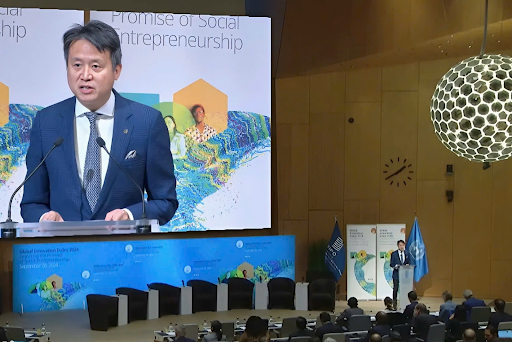
02/10/2024
Vietnam Leads in High-Tech Imports and Exports
Vietnam has made notable strides in innovation, rising two positions to rank 44th in the 2024 Global Innovation Index (GII) report released by the World Intellectual Property Organization (WIPO) in Geneva on September 26. Within ASEAN, Vietnam ranks 4th, following Singapore, Malaysia, and Thailand. The World Intellectual Property Organization releases the Global Innovation Index report. Photo: WIPO This year, Vietnam saw substantial improvements in both innovation input and output metrics. Specifically, the country rose 4 places in innovation input to rank 53rd and climbed 4 spots in innovation output to 36th. Notably, Vietnam is a world leader in High-Tech Imports, High-Tech Exports, and Creative Goods Exports, measured as a percentage of total trade. The GII 2024 report also recognized Vietnam as one of eight middle-income countries with the most significant ranking improvements since 2013. This achievement reinforces Vietnam's position as the second-most innovative lower-middle-income country, trailing only India. Minister of Science and Technology - Mr. Dat Huynh stated that this success reflects the government’s decisive direction and the dedicated efforts of ministries, local authorities, and the business community. This ranking advancement not only boosts Vietnam's competitiveness but also opens substantial opportunities for the country on the global stage. Source: Vietnam.net
Read more