21/07/2023
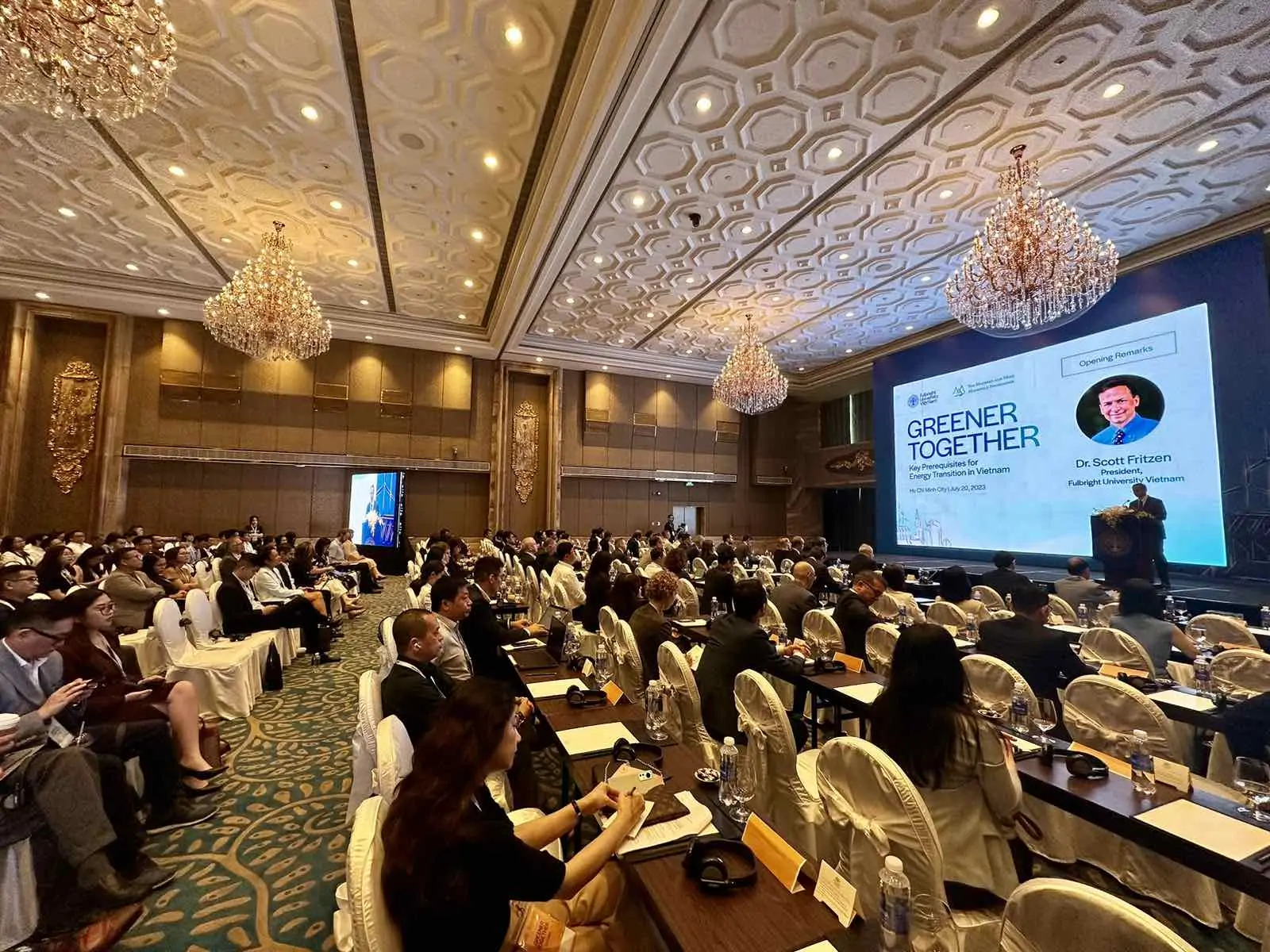
TMA at Green Together: Focus on sustainable technology
On July 20th, a significant conference took place in Vietnam, marking a milestone in the nation’s journey toward a sustainable future. This event brought together influential figures from government bodies in Vietnam, the United States, Japan, China, and leaders from various industries. The conference also featured renowned experts from prestigious institutions such as Harvard University, Fulbright University Vietnam, and Peking University. This assembly of minds was a testament to the global commitment to addressing climate change and advancing energy transitions. Collaborative Initiative for a Greener Vietnam The conference served as the launchpad for a new initiative titled "Towards a Green Society - Crucial Foundations for Energy Transition in Vietnam," spearheaded by Fulbright University Vietnam in partnership with the Maureen & Mike Mansfield Foundation. This initiative aims to explore the necessary foundations and strategies required to accelerate Vietnam’s energy transition. By focusing on essential prerequisites, the project seeks to ensure that Vietnam can effectively navigate the challenges of moving towards a more sustainable energy system. TMA Tech Group’s Active Participation and Insights TMA Tech Group, a leading player in the IT software industry, was actively involved in this pivotal conference. The group’s participation underscored its ongoing commitment to Vietnam’s socio-economic development, particularly in the realm of energy transition. By engaging directly with policymakers, industry experts, and business leaders, TMA Tech Group was able to gain valuable insights into the opportunities and challenges associated with this critical transition. The Urgency of Climate Action and Vietnam’s Strategic Role One of the key moments of the conference was the address by Climate Envoy John Kerry. His speech highlighted the pressing need for global climate action, stressing that the world is at a critical juncture. He pointed out that both nations and private enterprises are making significant investments in clean energy, and Vietnam’s role is particularly vital in this global effort. As a key player in the region, Vietnam’s actions and policies will have a substantial impact on the global pursuit of a greener future. Building the Foundations for a Green Transition The "Towards a Green Society" conference was more than just a meeting of minds; it was a platform for concrete action. Through expert presentations, collaborative dialogues, and in-depth discussions, participants were able to propose innovative solutions and outline essential policy frameworks. These discussions also highlighted significant investment opportunities, all of which are critical to laying the groundwork for a successful green transition in Vietnam and beyond. TMA Tech Group’s involvement in these discussions demonstrates its commitment to contributing to this transformative journey, not just for Vietnam but for the global community. Commitment to Quality and International Standards Beyond its involvement in energy transition initiatives, TMA Tech Group continues to demonstrate its commitment to excellence in service delivery. The company adheres to international standards such as CMMI Level 5, ISO 27001, and ISO 9001, ensuring that its services meet the highest quality benchmarks. This focus on quality not only enhances client trust but also sets TMA Tech Group apart from competitors who may not have achieved these rigorous certifications. Expanding Global Reach Through Tailored Solutions TMA Tech Group’s presence in international markets, including North America, Europe, and Asia, gives the company a broad perspective on diverse client needs. This global reach enables TMA Tech Group to deliver tailored software solutions that address the specific challenges and requirements of clients from different regions. By leveraging its international experience, TMA Tech Group ensures that its solutions are both innovative and relevant, helping clients to navigate the complexities of the global market. Conclusion TMA Tech Group’s participation in the "Towards a Green Society" conference underscores its commitment to playing a significant role in Vietnam’s energy transition. By engaging with key stakeholders and contributing to discussions on innovative solutions and policy frameworks, TMA Tech Group is positioning itself as a leader in the drive towards a sustainable future. Coupled with its adherence to international quality standards and its global market presence, TMA Tech Group is well-equipped to support Vietnam’s journey towards a greener, more sustainable society.
Read more.webp)
30/06/2023
Web3 - The Future of the Internet
As the digital landscape continues to evolve, Web3, often hailed as the next generation of the internet, is transforming how businesses operate and engage with users. Web3 represents a decentralized version of the internet, powered by blockchain technology, smart contracts, and peer-to-peer networks. This emerging technology promises to bring about significant advancements in various industries, with finance, social platforms, and gaming leading the charge. Web3 in Numbers: A Growing Ecosystem The adoption of Web3 is on the rise, with finance applications benefiting the most from its decentralized and transparent architecture. In fact, 46% of finance apps are now utilizing Web3 technology . Beyond finance, other sectors such as social applications (8.9%) and gaming (5.7%) are also embracing Web3 to create more interactive and secure user experiences. From a geographical standpoint, North America leads the global Web3 economy , accounting for 34% of the market. Europe holds 24% , and the Asia-Pacific region ranks third with 18% . The remaining market share is distributed among the Middle East and Africa (14%) and South America (10%) . Web3 Blockchain Market: Current Trends and Future Growth Web3’s growth is reflected in the rapid expansion of the blockchain market. In 2021 , the global Web3 blockchain market was valued at USD 3.8 billion . The market saw a slight dip in 2022 , with a valuation of USD 1.73 billion , but it is projected to experience exponential growth. Experts anticipate the Web3 blockchain market to expand at a Compound Annual Growth Rate (CAGR) of 47.1% from 2023 to 2030 , driven by growing interest and investments in decentralized technologies. Looking ahead, the market’s revenue is expected to reach USD 23.3 billion by 2028 , achieving a CAGR of 41.6% during this period. The North American market , which dominated in 2022 with over 37% of global revenue share , will continue to play a pivotal role in this growth. At the same time, the Asia-Pacific region is projected to become the fastest-growing market, thanks to its technological advancements and adoption of blockchain applications across various sectors. Opportunities and Benefits for Businesses Web3 presents a wealth of opportunities for businesses looking to enhance their digital strategies and improve operational efficiency. Key benefits of Web3 include: Decentralization : Traditional centralized systems are prone to data breaches, monopolies, and censorship. Web3 offers a decentralized alternative, distributing control and enhancing security and privacy for users and businesses alike. Enhanced Transparency : Web3 is built on blockchain technology, which provides an immutable ledger of transactions and data. This transparency builds trust among users and fosters greater accountability for businesses. Improved Security : With data breaches and cyberattacks becoming increasingly common, Web3’s cryptographic security measures provide a robust defense against such threats, ensuring the safety of user data. Cost Efficiency : Web3 reduces the need for intermediaries in transactions, cutting down on costs for businesses. By automating processes through smart contracts, businesses can operate more efficiently and effectively. Regional Insights: A Global Phenomenon The Web3 revolution is not confined to one region. While North America remains the dominant player, Asia-Pacific is expected to outpace other regions in terms of growth . The region’s rapid adoption of blockchain and digital technologies positions it as a key driver in the future of Web3. Businesses in North America have long benefited from a mature market and early access to cutting-edge technologies. However, emerging markets in Asia are quickly catching up, presenting exciting opportunities for global companies to expand their reach and tap into new client bases. The Middle East, Africa, and South America are also gaining traction, leveraging Web3’s decentralized infrastructure to create more inclusive and accessible economies. TMA Solutions: A Leader in Web3 Innovation As Web3 continues to reshape industries, it’s crucial for businesses to partner with experienced technology providers to stay ahead of the curve. TMA Solutions is a leader in this space, with over 27 years of experience in the software industry . Serving clients in 30 countries , TMA has the expertise and scale to deliver cutting-edge Web3 solutions tailored to the specific needs of businesses. One of TMA’s greatest strengths lies in its technical capability . With a team of over 4,000 software engineers , TMA can handle large and complex projects across a wide range of technologies, including AI, IoT, Big Data, Cloud Computing, and Blockchain . This depth of expertise enables TMA to provide businesses with the tools they need to harness the power of Web3 and thrive in an increasingly digital world. Conclusion: Embracing the Future with Web3 The potential of Web3 is vast, and businesses that leverage this transformative technology stand to gain a competitive edge in the market. From decentralization and transparency to security and cost efficiency, Web3 offers numerous advantages for forward-thinking companies. As the global Web3 blockchain market continues to grow, with North America and Asia-Pacific leading the charge, partnering with experienced technology providers like TMA Solutions will be essential for businesses looking to navigate this new digital frontier. With its extensive experience, technical expertise, and global reach, TMA is well-positioned to help businesses seize the opportunities of Web3 and drive innovation for the future.
Read more.webp)
28/06/2023
5G Industry: Trends and Projections for Future Development
The 5G industry is rapidly evolving, with substantial advancements and promising forecasts shaping its future. This article delves into the latest trends, market growth, and future projections of 5G technology, offering valuable insights for business owners and industry professionals. Current State of 5G Technology As of September 2022, the number of global 5G mobile subscribers reached approximately 870 million. This figure underscores the swift adoption of 5G technology across the globe. The momentum is set to continue, with projections indicating that 5G subscriptions will soar to 5 billion by the end of 2028. This remarkable growth highlights the increasing demand and integration of 5G in various sectors. Regional Growth Trends In 2022, North America and Northeast Asia emerged as the fastest-growing regions for 5G deployment. These areas are leading the way in 5G adoption due to their advanced infrastructure and significant investments in technology. This trend is expected to continue as these regions enhance their 5G networks and expand their coverage. Market Size and Projections The financial landscape of the 5G industry is equally promising. In 2022, the market size for 5G was valued at $30.62 billion. The market is anticipated to grow to $44.71 billion by 2023, reflecting a compound annual growth rate (CAGR) of 46%. This rapid growth trajectory is expected to continue, with the market projected to reach $125.27 billion by 2027, exhibiting a CAGR of 29.4%. Increase in 5G Devices The proliferation of 5G devices is another indicator of the technology’s expansion. From February to March 2023, the number of announced 5G devices rose by 3%, reaching a total of 1,896 devices. Of these, 1,513 devices, or 79.8%, are commercially available. This represents a 51.3% increase in the number of commercial 5G devices since the end of March 2022. This growth reflects the increasing accessibility and adoption of 5G-enabled devices among consumers and businesses. Growth in 5G Infrastructure The 5G infrastructure market is also experiencing substantial growth. In 2023, the market is valued at $12.08 billion and is expected to grow at a compound annual growth rate (CAGR) of 33.6% from 2023 to 2030. This growth underscores the significant investments being made in 5G infrastructure, which are essential for supporting the expanding network and technology ecosystem. TMA Solutions: Expertise and Capability TMA Solutions, a leading player in the software industry, stands out for its extensive experience and technical capabilities. With over 27 years in the software sector, TMA has built a solid reputation and serves clients in 30 countries. This experience provides TMA with a competitive edge, especially when compared to newer entrants in the market. Furthermore, TMA boasts a large team of over 4,000 software engineers, enabling the company to manage large and complex projects efficiently. Their expertise spans a wide range of technologies, including AI, IoT, Big Data, Cloud Computing, and Blockchain. This diverse technical capability positions TMA as a key player in supporting and advancing 5G technology and related innovations. Conclusion The 5G industry is poised for significant growth, driven by increasing subscriber numbers, expanding regional adoption, and substantial market investments. The rise in 5G devices and infrastructure further reflects the technology’s rapid integration into various sectors. TMA Solutions, with its extensive experience and technical expertise, is well-positioned to contribute to and benefit from these advancements. As 5G continues to evolve, staying informed and adaptable will be crucial for business owners and industry professionals looking to leverage its potential.
Read more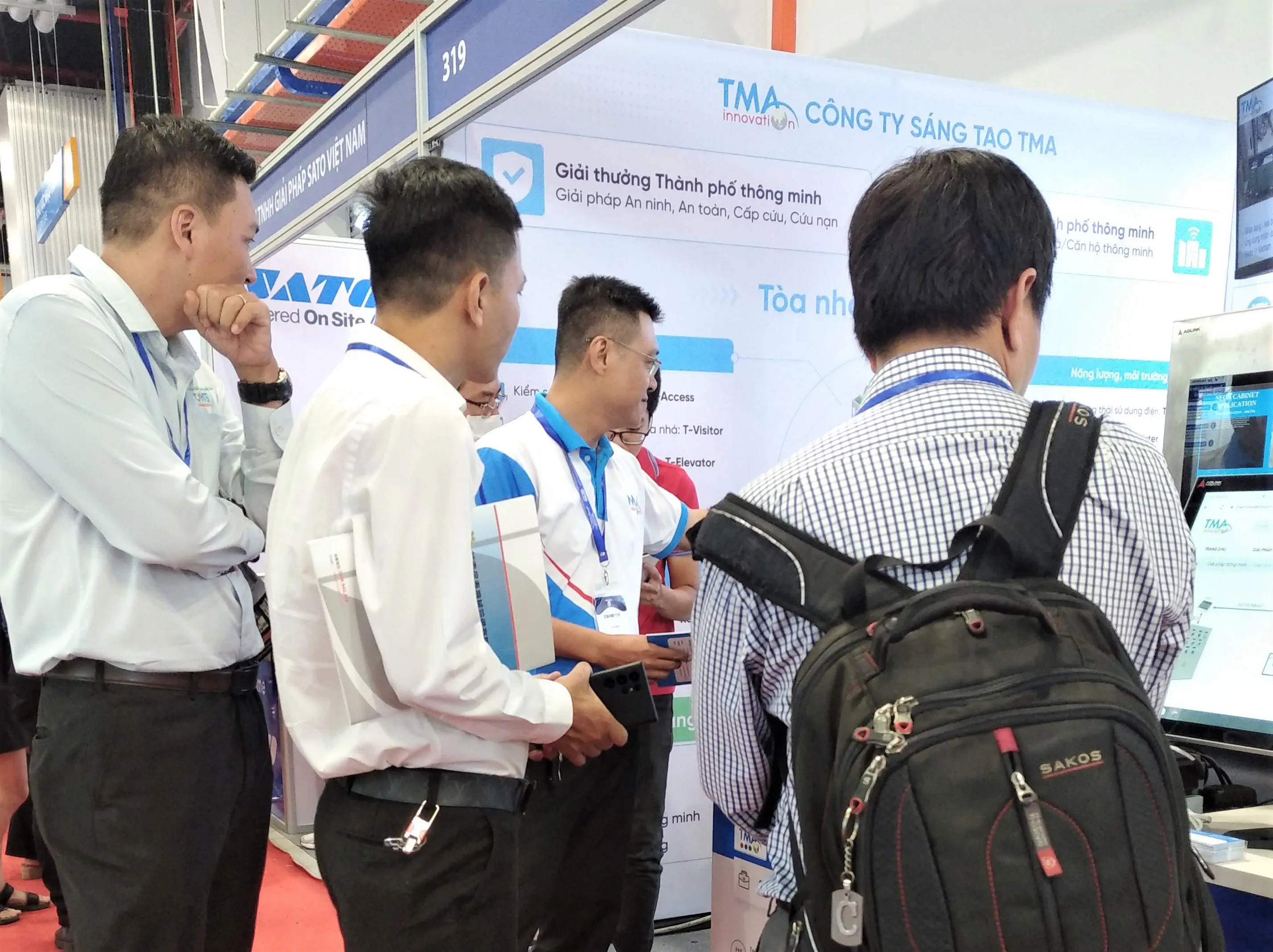
25/06/2023
TMA at VIMF 2023: Innovations in Manufacturing and Smart Building
TMA Solutions recently showcased its cutting-edge technology at the Vietnam Industrial & Manufacturing Fair (VIMF) 2023. Held from June 19-21 at the World Trade Center in Binh Duong, this 18th edition of the fair was a pivotal event for industries focused on machinery, equipment, and technologies pertinent to manufacturing and mechanical engineering. TMA Solutions used this platform to demonstrate their groundbreaking innovations in the fields of the Internet of Things (IoT), Artificial Intelligence (AI), and Smart Building technologies. Impressive IoT Demonstrations A highlight of TMA’s exhibition was their advanced IoT demo suitcases. These suitcases were designed to showcase a variety of IoT devices and sensors capable of real-time data collection and analysis. Such technology is instrumental for industries like manufacturing, logistics, and agriculture, where it can significantly enhance operational productivity and efficiency. The ability to monitor and analyze data in real time allows businesses to make informed decisions, optimize processes, and improve overall performance. Modern Industrial AI Solutions In addition to their IoT innovations, TMA presented a state-of-the-art Industrial AI Display. This modern display was tailored for sectors including manufacturing and automation. It offers precise visual representation, which aids in seamless operations and intelligent decision-making. The integration of AI into industrial settings ensures that processes are not only automated but also optimized for accuracy and efficiency. This technology is essential for control rooms and automation hubs, where precise and timely information is crucial. Smart Building Innovations TMA also took the opportunity to highlight its advancements in smart building technologies. At VIMF 2023, the company introduced two flagship products: T-Building and T-Locker. These solutions are designed to enhance various aspects of smart buildings, including security, utility services, environmental control, healthcare innovations, and energy management. T-Building provides comprehensive smart security and utility services, while T-Locker focuses on optimizing environmental conditions and energy usage. These solutions aim to improve operational efficiency and reduce costs for businesses by leveraging advanced technology to create smarter, more responsive building environments. Commitment to Quality and Experience TMA Solutions’ commitment to excellence is underscored by its adherence to international quality standards. The company is certified under CMMI Level 5, ISO 27001, and ISO 9001, demonstrating its dedication to delivering high-quality services that meet stringent global standards. These certifications not only enhance client trust but also differentiate TMA from competitors who may not possess such credentials. With over 27 years of experience in the software industry, TMA Solutions has established a robust track record of serving clients across 30 countries. This extensive experience positions TMA as a reliable and experienced player in the market, particularly when compared to newer entrants in the industry. The company’s long-standing presence and successful track record further validate its ability to deliver innovative solutions and meet the evolving needs of its clients. Conclusion TMA Solutions’ participation in VIMF 2023 underscored its role as a leader in technological innovation. The company’s showcase of IoT, AI, and smart building solutions reflects its ongoing commitment to advancing industry standards and meeting the needs of modern businesses. As the event concluded, TMA’s contributions were recognized for their potential to drive future breakthroughs and set new benchmarks in the technology sector. With a strong emphasis on quality and extensive experience, TMA Solutions continues to be a trusted partner for businesses seeking cutting-edge technological solutions.
Read more
23/06/2023
RPA Market Overview: 2021-2023 Trends and Future Expectation
The landscape of Robotic Process Automation (RPA) has evolved significantly over the past few years, showing remarkable growth and widespread adoption across various industries. As businesses increasingly recognize the benefits of automation, the RPA market has experienced substantial expansion. This article provides an overview of the key trends and future expectations for the RPA market from 2021 to 2023, drawing insights from industry surveys and research reports. Key Findings on RPA Adoption The implementation of RPA has become a strategic priority for many organizations. According to Deloitte’s Global RPA Survey conducted in 2021, a substantial 78% of organizations had already implemented RPA within their operations. Another 16% were planning to adopt RPA within the next three years, while only 6% of organizations had no plans to integrate RPA into their processes. These statistics underscore the growing recognition of RPA as a critical tool for enhancing operational efficiency and achieving competitive advantage. The Impact of RPA on Business Operations RPA has demonstrated its value across multiple dimensions of business operations, consistently meeting and often exceeding expectations. The following are some of the key benefits that organizations have reported: Improved Compliance : 92% of organizations reported enhanced compliance as a result of implementing RPA. By automating routine tasks, RPA helps ensure that processes are carried out consistently and in accordance with regulatory requirements. Enhanced Quality and Accuracy : 90% of businesses experienced improvements in the quality and accuracy of their operations. Automation reduces the risk of human error, leading to more reliable and precise outcomes. Increased Productivity : 86% of organizations noted a significant boost in productivity. RPA enables businesses to automate repetitive tasks, allowing employees to focus on higher-value activities that require human judgment and creativity. Cost Reduction : 59% of companies reported cost savings through the use of RPA. By streamlining processes and reducing the need for manual intervention, organizations can lower operational costs and improve their bottom line. Market Size and Growth Projections The RPA market has seen impressive growth, with significant increases in market size year over year. In 2022, the RPA market was valued at USD 2,322.9 million. By 2023, this figure had risen to USD 2,942.7 million, reflecting the strong demand for automation solutions. Looking ahead, the market is expected to continue its rapid expansion, with a projected compound annual growth rate (CAGR) of 39.9% from 2023 to 2030. By 2030, the RPA market is forecasted to reach an astounding USD 30,850.0 million. Regional and Industry Insights RPA adoption varies across regions and industries, with some areas leading the charge in embracing automation technologies: North America : This region accounted for the largest share of the RPA market in 2022, representing 37.2% of the global market. North America is expected to maintain steady growth during the forecast period, driven by the continued adoption of RPA across various sectors. Small and Medium Enterprises (SMEs) : The SME segment is projected to experience the highest CAGR from 2023 to 2030. As SMEs increasingly recognize the benefits of automation, RPA solutions are becoming more accessible and tailored to the needs of smaller organizations. Banking, Financial Services, and Insurance (BFSI) : The BFSI sector holds the largest revenue share of the RPA market, accounting for 28.8% of the overall market. This industry has been a pioneer in adopting RPA to automate routine processes, enhance client service, and ensure regulatory compliance. Future Expectations for the RPA Market The future of the RPA market is bright, with significant growth expected in both software and related services. By 2025, the RPA software market is anticipated to reach USD 6.5 billion. In addition to software, RPA-related services are projected to grow even more rapidly, potentially reaching USD 16 billion by 2025. These services, which include consulting, implementation, and support, are essential for organizations looking to successfully integrate RPA into their operations. TMA Solutions: A Global Leader in RPA TMA Solutions, with its strong presence in international markets across North America, Europe, and Asia, is well-positioned to capitalize on the growing demand for RPA solutions. With a large team of over 4,000 software engineers, TMA has the scale and technical capability to handle large and complex projects. The company’s expertise spans a wide range of cutting-edge technologies, including Artificial Intelligence (AI), Internet of Things (IoT), Big Data, Cloud Computing, and Blockchain, making them a key player in the global RPA market. Conclusion As organizations continue to seek ways to improve efficiency and reduce costs, the adoption of RPA is expected to accelerate. The market’s rapid growth, coupled with the increasing accessibility of automation solutions, suggests that RPA will become an integral part of business operations across industries. Companies like TMA Solutions, with their global reach and technical expertise, are poised to lead the way in delivering innovative RPA solutions that meet the evolving needs of businesses worldwide.
Read more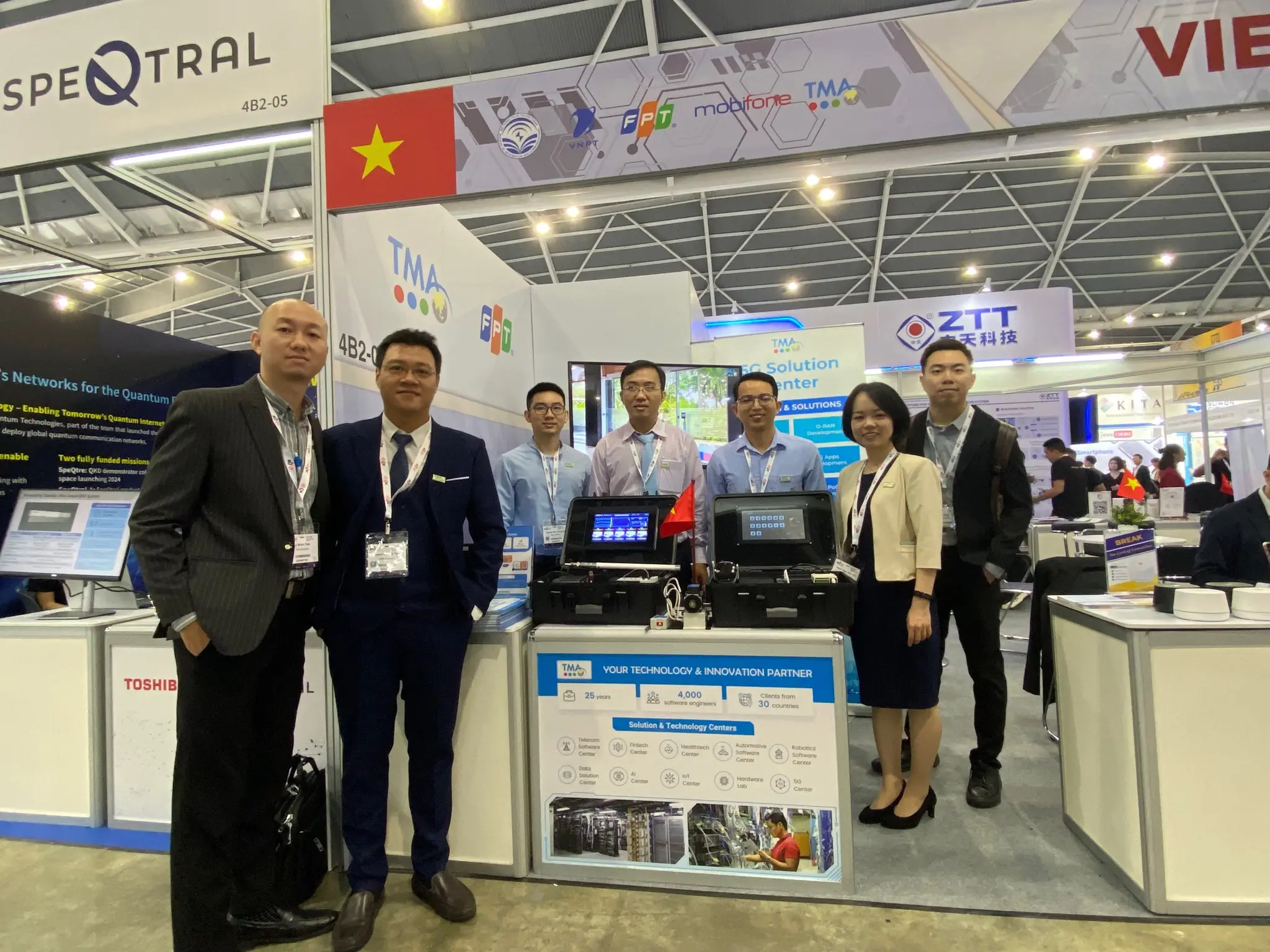
08/06/2023
TMA at ATxSG 2023: New 5G, Manufacturing, and Healthcare Solutions
On June 7, 2023, TMA Solutions made a notable appearance at Asia Tech x Singapore (ATxSG) 2023, a premier technology event in the region. The exhibition, organized by the Infocomm Media Development Authority (IMDA) and Informa Tech, and supported by the Singapore Tourism Board (STB), provided a platform for TMA to showcase its latest advancements in technology. Event Overview Asia Tech x Singapore 2023 is a leading industry event that fosters discussions between businesses, technology professionals, and government entities. Held at booth 4B2-07, TMA Solutions participated with a range of cutting-edge technology products and solutions. This event is known for its ability to generate meaningful conversations and collaborations in the tech industry. TMA’s Technological Showcases At the event, TMA presented several innovative solutions across various domains: Simulated 5G Core Network : This solution offers a virtual representation of a 5G core network, enabling companies to test and optimize their 5G technologies. 5G Slicing Window App : A tool designed for the 5G telecommunications sector, this application supports network slicing, allowing for more efficient use of network resources. 5G Connected Car : Demonstrates the integration of 5G technology with automotive systems, enhancing connectivity and functionality in vehicles. 5G O-RAN Development : Focuses on Open Radio Access Network (O-RAN) technologies, which are crucial for the future of 5G networks. T-Container : A solution aimed at improving logistics and supply chain management through advanced container management. Device Predictive Maintenance : Uses predictive analytics to anticipate equipment failures before they occur, thereby reducing downtime and maintenance costs. mCare – Remote Health Monitoring : Provides a platform for monitoring patient health remotely, offering significant benefits in healthcare. CDP (Client Data Platform) : A comprehensive solution for managing and analyzing client data to enhance business operations. To provide a hands-on experience, TMA set up three demo products at their booth: 5G Slicing Window App : Showcased within the 5G telecommunications field. T-Container : Demonstrated its capabilities in logistics management. Predictive Maintenance of Equipment : Highlighted its applications in the manufacturing sector. These demonstrations allowed visitors to gain a deeper understanding of TMA’s solutions and their practical applications. TMA’s Technical Prowess With a workforce of over 4,000 software engineers, TMA Solutions stands out for its ability to manage large and complex projects. The company’s expertise spans a broad range of technologies, including: Artificial Intelligence (AI) Internet of Things (IoT) Big Data Cloud Computing Blockchain This extensive technical capability enables TMA to address diverse client needs and deliver high-quality solutions across various industries. Proven Experience and Reliability TMA Solutions boasts over 27 years of experience in the software industry, serving clients across 30 countries. This extensive track record underscores the company’s reliability and expertise, particularly when compared to newer market entrants. TMA’s long-standing presence in the industry reflects its ability to adapt to technological advancements and evolving market demands. Conclusion TMA Solutions’ participation in Asia Tech x Singapore 2023 highlighted its commitment to innovation in 5G technology, manufacturing, and healthcare. By showcasing advanced solutions and leveraging its extensive technical expertise, TMA reaffirmed its position as a leader in the software industry. The event not only provided a platform for demonstrating cutting-edge technologies but also reinforced TMA’s reputation for reliability and experience in delivering sophisticated solutions. As TMA continues to push the boundaries of technology, its involvement in prominent industry events like ATxSG 2023 underscores its role in shaping the future of technology and addressing the evolving needs of businesses worldwide.
Read more